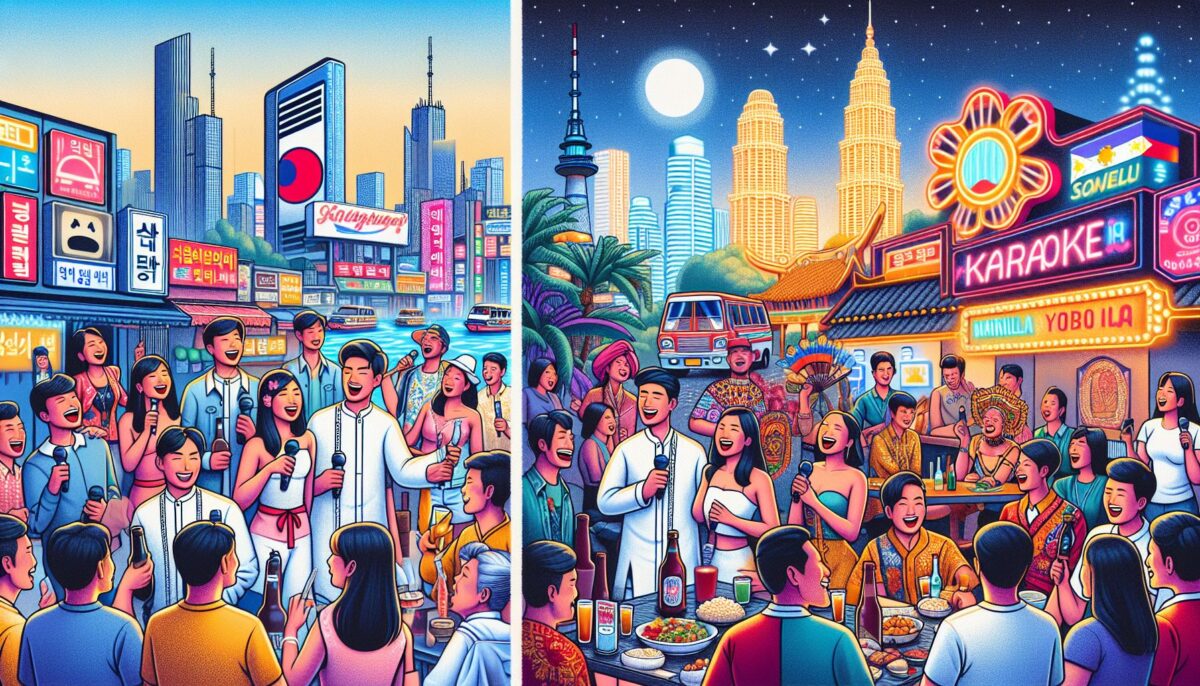
Karaoke is more than just a pastime in Asia; it is a cultural phenomenon. In cities like Seoul and Manila, singing your heart out has become an essential part of socializing and entertainment. This article explores the differences between karaoke cultures in these two vibrant cities, examining their settings, styles, song selections, and the social aspects surrounding karaoke.
The Origins of Karaoke: A Brief Overview
Seoul: A Dance with Technology
- Modern Era: In the 1970s, karaoke began in Japan. Seoul adopted and localized this trend.
- Technology Integration: Korean karaoke bars often incorporate the latest sound systems and visual technology. Screens display lyrics, and many places offer private rooms for a more intimate experience.
Manila: A Love for Music
- Historical Roots: Karaoke in the Philippines has deep roots in the country’s musical heritage. It gained popularity in the 1980s.
- Community and Sing-Alongs: Filipinos enjoy singing in groups, and it often takes place in various settings—from homes to bars.
Differences in Venue and Experience
Private Rooms vs. Public Spaces
- Seoul: Most karaoke venues, known as noraebang, provide private rooms for groups. This setup encourages a comfortable atmosphere.
- Manila: While some karaoke bars have rooms, many feature open areas. This allows for a more public performance. Singers often share the stage, leading to spontaneous interactions.
Atmosphere and Ambiance
- Noraebang: These Korean venues are often sleekly designed, with modern furnishings and interactive systems. Ambient lighting adds to the experience.
- Karaoke Bars in Manila: Filipino venues are more casual. They often feature bright decorations and a festive mood, enhancing the party vibe.
Song Selection: East Meets West
Language and Genre Preferences
- Seoul: Korean pop (K-pop) dominates the song selection. Local hits, as well as international music, are available, but K-pop reigns supreme.
- Manila: Song choices range from pop ballads to classic Filipino favorites. English songs, particularly Western music, are prevalent, appealing to a wide audience.
Accessibility
- Seoul’s Technology: Song databases are updated regularly, giving patrons access to the latest hits. Users can easily search for songs through a digital interface.
- Manila’s Nostalgic Favorites: Many Filipinos enjoy singing songs from their childhood. Classic hits are readily available, and lyrical familiarity enhances participation.
Social Dynamics of Karaoke
Filial and Familial Bonds
- Seoul: Karaoke often serves as a bonding activity among friends or colleagues after work. It strengthens social connections in corporate culture.
- Manila: Karaoke scenarios frequently involve families. Celebrations like birthdays or holidays highlight this atmosphere, welcoming everyone from grandparents to children.
Approach to Performance
- Seoul: Singing may feel more performative, with singers aiming to impress. There is a focus on vocal skill.
- Manila: Performance tends to be more about enjoyment than skill. The crowd encourages participation, regardless of expertise.
Practical Examples
Noraebang in Seoul
- Experience: You enter a stylish room, equipped with high-tech sound systems. You choose songs via a tablet interface. Sessions often include snacks and drinks.
- Popular Chains: G karaoke and K Cube are popular for their modern setups and expansive song databases.
Karaoke Bars in Manila
- Experience: Picture a lively environment. Singers take turns performing on a stage, often joined by friends. It’s common to see people jumping along or cheering.
- Popular Places: Red Box and Smokey’s are well-known venues that capture the lively essence of Filipino karaoke culture.
Comparison Table: Karaoke in Seoul vs. Manila
| Feature | Seoul | Manila |
|————————————|—————————|—————————-|
| Venue Type | Private rooms (noraebang) | Open stage or private |
| Atmosphere | Sleek and modern | Casual and festive |
| Song Selection | K-pop dominant | Mix of Filipino and English|
| Social Setting | Friends/colleagues | Family-oriented |
| Performance Style | More performative | Fun and inclusive |
FAQ Section
1. What is the main difference between noraebang and typical karaoke bars?
Noraebang provides private rooms for groups, while many karaoke bars in Manila often feature an open stage for communal singing.
2. What genres are most popular at karaoke in Seoul and Manila?
Karaoke in Seoul focuses on K-pop and contemporary hits, while Manila embraces a variety of genres, with a strong emphasis on classic Filipino and Western songs.
3. How do social norms differ between the two karaoke cultures?
In Seoul, karaoke often emphasizes skill and vocal performance, especially among friends or colleagues. In contrast, Manila encourages participation for fun, often including family members in celebrations.
4. Are there famous karaoke songs in both cultures?
Yes, popular karaoke songs in Seoul include current K-pop hits. In Manila, notable favorites may include classics like “Buwan” or “Paano Kita Mapapasalamatan.”
Understanding these differences enhances our appreciation of karaoke culture in both cities. Each experience reflects their society’s values and collective spirit, making karaoke a unique aspect of life in Seoul and Manila.
